White Bird (Part I)
Mission 6: Operation Silver Bridge – October 3rd, 2010 | [NO COMM]
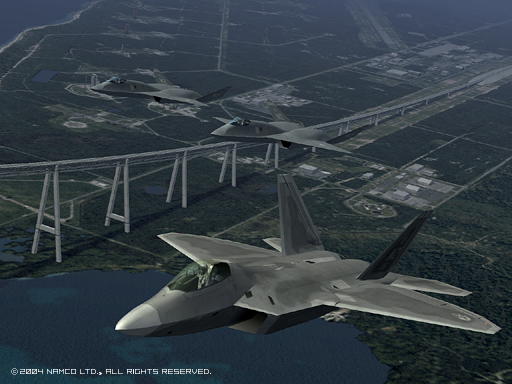
Overview: After a layover at Heierlark Air Force Base, Wardog Squadron is sent to Basset Space Center to provide cover for an SSTO catapult launch bund for the Osean spaceplane Arkbird, currently in orbit over the space center.
In order to counter the firepower of the Scinfaxi’s burst missiles, the Osean government has taken the extraordinary step of arming the Arkbird with a tactical laser pod to strike the Yuktobanian superweapon from the safety of low Earth orbit.

Guest Commentator: YOU HAVE UNLOCKED: Guest Commentator Lunethex. The Champion of the Taser returns for Ace Combat 5. Since his last appearance in Ace Combat 04, he has since started an LP of Urban Chaos: Riot Response, a game that is equal parts amazingly over the top and existentially horrifying if taken as anything other than tone-deaf parody. He is joined in this fascinating examination of mid-00s American Law Enforcement and Counter-Terrorism Pornography by his Syphon Filter cohorts, the Time Warriors aka Coolguye and TheLastRoboKy, and the patron saint of hardware failure, Jade Star.

HEIRLARK AFB
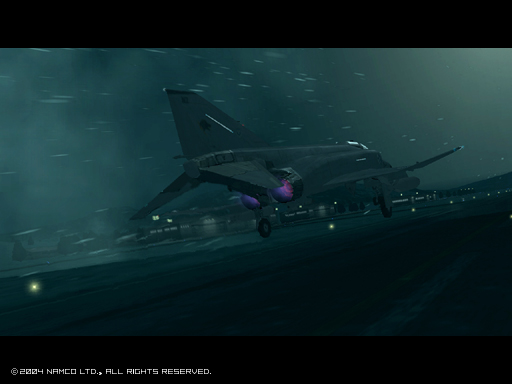
We return to Heirelark Air Force Base for the first time since our brief visit there in Ace Combat Zero.
Heirelark AFB was once a Belkan Air Force facility on Belka’s one time southwestern frontier and a knife at the throat of the Osean Federation. Now it stands as a vestige of the social upheaval brought about by Belka’s economic collapse in the late 1980s, Osea’s unchecked expansion in the early 1990s, and the Belkan War that brought it all to a head.
When the Belkan Army ceded South Belka to the Allied Forces in the late spring of 1995, the cities and provinces of the south surrendered to Osea and declared themselves independent of the government in Dinsmark to the north. With the signing of the Treaty of Lumen that officially ended the Belkan War, the demilitarized lands south of the Waldreich Mountains and the Hydrian Line were officially consigned to Osean control and “South Belka” became “North Osea” overnight.
Fifteen years of living as involuntary Osean citizens has created an unsmall amount of strife among the former Belkan population of North Osea. While the Osean government has been relatively considerate about maintaining Belkan culture and traditions in North Osea, most North Osean citizens have assimilated into Osean culture fairly well. However, there are a vocal minority to traditionalists and Belkan nationalists with North Osea who resent living under the alleged thrall of the Osean Federation. These hardliners will pointedly tell you that you are in South Belka when you visit, and that North Osea is a term of oppression.
Trying to wrangle a peaceful and progressive solution to the “Belkan Issue” had been one of President Harling’s key domestic policy planks in his re-election bid, however the outbreak of the war with Yuktobania has caused his administration to suspend all work on the matter for the time being.
As for Heierlark itself in the here and now, the air base is home to the Osean Air Defense Force’s pilot training academy. All four members of the current Wardog Squadron received their initial flight instruction at Heierlark before being posted to Sand Island to finish actual combat school with Jack Bartlett’s training flight. The Wardogs have been ordered by OADF Central Command to bring Heierlark’s current crop of nugget pilots with them home to Sand Island AFB to reinforce the base’s fighter wing numbers.
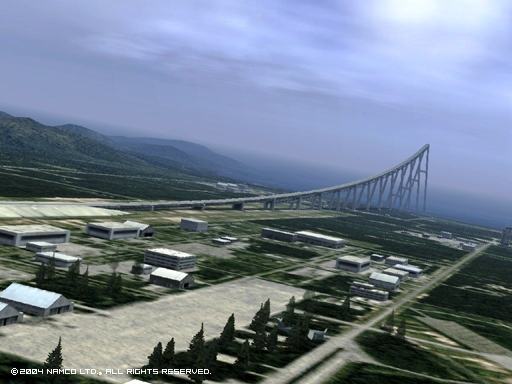
BASSET SPACE CENTER
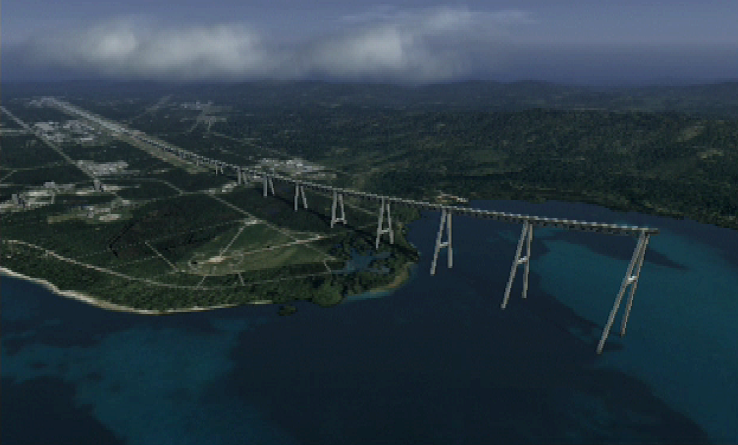
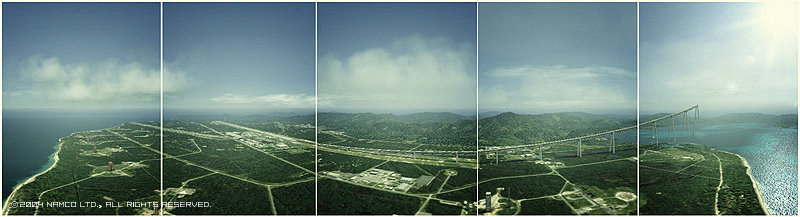
Located close to the equator on Osea’s western peninsula, Basset Space Center is one of the world’s preeminent space launch facilities, rivaled only by Usea’s Riass Space Center in the Comona Islands. The facility lies south east of McNealy Air Force Base, which often co-ordinates operations with Basset.
Basset is the home of the Osean Air and Space Administration, and features multiple rocket and shuttle launch facilities and a gigantic magnet-accelerated mass driver for sled launched single-stage-to-orbit launches. Mission control for both the International Space Station and the Arkbird project is also handled by Basset.
The facility was jointly constructed and invested in by both the Osean Federation and the Union of Yuktobanian Republics as a symbol of their new era of international cooperation. However, with the preceding freeze in international relations in the run-up to the Circum-Pacific War, the delegation from the Yuktobanian Space Agency unanimously withdrew from Basset Space Center and returned to Yuktobania before the outbreak of the war.
Osean President Vincent Harling redirected a significant portion of the Osean Federation’s defense budget into funding Basset and its programs like the ISS and Arkbird. Harling announced in his first State of the Union Address to the Osean Congress that the time had come for the world to focus its efforts on the peaceful exporation of the cosmos rather than petty and destructive conflict between individual nations.
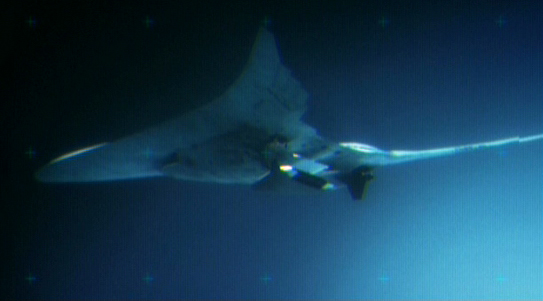
THE ARKBIRD
“A bridge of peace to outer space.” Those were the words President Harling used to describe the newly unveiled Arkbird to the world.
Conceived of during the Cold War, the Arkbird was originally an ambitious plan for a continuous orbital spaceplane platform designed to act as a mobile shield against and interceptor platform for potential ICBMs launched from Yuktobania or Erusea. However, a lack of funding and sufficiently advanced technology to see the project completed hobbled its development until the mid-90s after the official end of the Cold War.
Ironically, it was only with the cooperation of Yuktobania that the Arkbird came into existence. Having outlived its purpose as a missile defense shield, the Arkbird was instead repurposed into a vehicle for peaceful space exploration and scientific experimentation and as a part of the joint Osea-Yuktobania spaceguard program.
After Stonehenge was shuttered in Delarus after Ulysses Day, the responsibility of clearing out asteroid fragments lingering in orbit around the Earth was turned over to the Arkbird with its short-range beam laser systems. As of 2008, nearly 80% of all remaining Ulysses 1994XF04 fragments and satellite debris left in its wake have been cleared away.
In 2008, the Arkbird also hosted the final day of the G7 Summit, where the leaders of Osea, Yuktobania, Erusea, the Federation of Central Usea, Nordlands, Verusa, and Anea (represented jointly at the time by delegations from Emmeria and Nordennavic—the Estovakian delegation was disinvited after the Osean, Erusian, FCU, and Nordlands delegations refused to acknowledge the legitimacy of the Lyes United Front’s de facto military government as the Estovakian Civil War raged on). During the “space summit,” President Harling and Yuktobanian Prime Minister Nikanor jointly issued the “Arkbird Declaration,” announcing the proposal for the START2 nuclear arms reduction treaty.
Now, the Arkbird has been reluctantly pulled into the war with the country who helped build and support it. The Osean Department of Defense has declared that only the Arkbird can stand as a potential match for Yuktobania’s Scinfaxi super submarine and its SLBM weaponry and has ordered an experimental A-SAT tactical laser pod ferried up to the craft via an SSTO supply ship to be installed upon it and used against Scinfaxi when she reappears next.
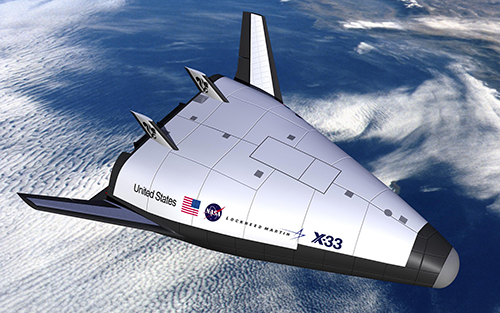
SSTO
The holy grail of space launch technology. The acronym is short for “single-stage-to-orbit”. An SSTO craft is capable of going from a stationary position on the surface into Earth orbit without ejecting any hardware components such as booster rockets or fuel tanks. While several concepts and plans for it exist, there has yet to be a successful SSTO vehicle or launch. The Lockheed Martin VentureStar was intended to be an SSTO spaceplane platform meant to replace the Space Shuttle, but was ultimately cancelled by the US government along with its testbed predecessor, the Lockheed Martin X-33.
In Ace Combat 5, the Osean SSTO craft is actually a hybrid propulsion system called a “Sled Launch SSTO,” a concept that has been floated as a means of making SSTO launches realistically feasible. In addition to having only a single-stage scramjet to push the laser pod into orbit on the supply ship, the SSTO launch is aided by a mass driver catapult that propels the craft to launch speeds along a parabolic magnetic rail, thus reducing the overall thrust and fuel needed to achieve escape velocity.
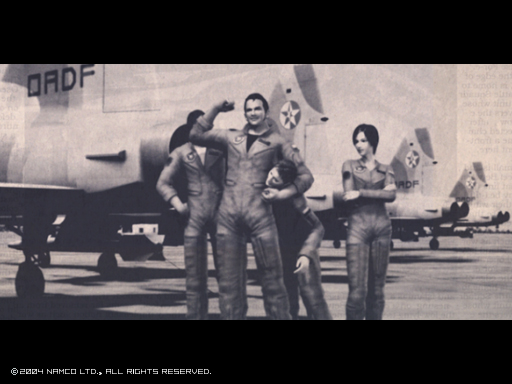
THE FOUR WINGS OF SAND ISLAND
We saw in Ace Combat 04 that Mobius 1 quickly attracted the attention of the Usean media following his standout performances in key air battles during the Shattered Skies War. And so it is with the member of Wardog Squadron. Of course, they happen to have a leg up on the other Ace Combat protagonists in terms of media accessibility, as Albert Genette is right there with them to tell their story and get it out there to the rest of the world.
Gennette’s headline story “The Four Wings of Sand Island” is the larger world’s first exposure to Wardog Squadron and its exploits up till now, namely saving the O.F.S. Kestrel from the Yuktobanian sneak attack on St. Hewlett. Of course, this is just a front page puff piece, all told, something to make people feel good and regain a sense of stability in the wake of Yuktobania’s blitz attack, not a zeitgeist changing cover store like “LONE FIGHTER DESTROYS STONEHENGE” from Shattered Skies.
What this little aside really does is develop the character of Albert Genette himself a little more. Through sheer circumstance, he has been forced to rapidly shift from documentarian to embedded war correspondent. His focus has shifted from telling the story of one man in peacetime to telling the story of an entire war through the eyes of a single squadron. So let’s talk about that.
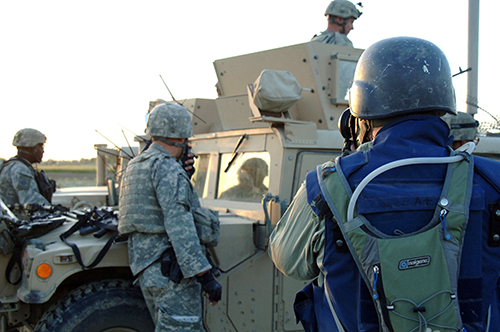
EMBEDDED JOURNALISTS
This is where The Unsung War starts to show off the contemporary cultural colours it was dyed in. As a commentary on and in some ways parody of modern warfare (notably of the Iraq War), the game has dressed itself up in a lot of the trappings developed either naturally or artificially in the broader public consciousness. The nationalism, jingoism, paranoia, polarization, and the blurring of propaganda and real journalism. We’re getting our first taste of them here, and they’re going to crop up more often at the game progresses.
The concept of journalists of one sort or another covering a war directly from combat zones is about as old as journalism itself. However, the term “Embedded Reporter” only entered public parlance during the 2003 Iraq invasion. The US news media had pressured the military for increased access to frontline operations after the first Gulf War and Afghanistan War were tightly regulated in terms of press access. The concession was to allow certain war correspondents to be embedded directly with deployed frontline troops during the initial invasion of Iraq when it was clear that the US military would be deployed into the country.
While never openly acknowledged as such, Albert Genette fuctions as an ad hoc embedded journalist with Wardog Squadron, being stationed with, moving with, and reporting on their actions—with strict oversight from Osean command, of course.
Of course, the concept of embedded journalism is a controversial one. Embedded reporters have been criticized for acting as press flacks and propagandists for the US military, telling versions of the story that the military wants to be told rather than the truth, acting as propagandists or cheerleaders for US military action. The concept has been derided as an inherent violation of basic journalistic ethics, and as being inherently silly and fraught with potential danger to both the journalist and the troops they are covering. For example, Geraldo Rivera, famously drew the ire of the media and military alike for accidentally revealing information about US troop deployments and plans of attack on live television and was quickly recalled from the frontlines by his superiors.
Because no matter what your politics, we can all agree that Geraldo Rivera is a fucking dumbass.
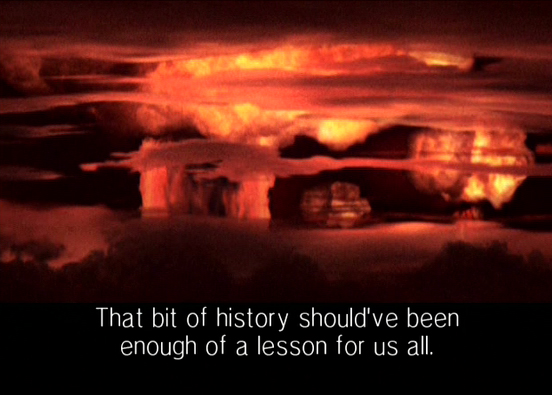
THE BELKAN WAR: A CRASH COURSE
If ever there was a time to go back and familiarize yourself with Ace Combat Zero, we’re getting closer and closer to it.
In many ways, Ace Combat 5 and Ace Combat Zero make something of the perfect double feature if you’re looking for a pair of games to play back-to-back. They each tell a complete story no matter what order you do them in. If you go 5-Zero, you to see the story of the Unsung War play out and then go back and see what really caused everything to unravel. If you go Zero-5 you get to see inverse of that arc and see how a seemingly minor and random chain of events lit the fuse on a bomb that would take 15 years to explode. Because the ingenious thing about them as a two-part story is that neither 5 nor Zero tells the complete truth about the Belkan War on their own. You need both games and what they say about each other to get the full picture.
Honestly, if I was doing this the smart way, I would have gone Zero-5 back to back, but I self-rationalize it that by doing 2 and then 04 as a buffer between them, you have time to either conveniently forget about Zero, or, if you know what’s coming in the future, to keep Zero in the back of your mind as the tension builds as we inch closer and closer, game by game, mission by mission, day by day, to that aforementioned big fucking bomb going off.
But in the here and now, with the cutscene preceding this mission, Albert Genette outlines everything we need to know about the Belkan War as far as it relates to Ace Combat 5.
Belka, a one mighty global super-power (albeit a second-rate super-power like Erusea or Emmeria) saw its fortunes rapidly decline as its economy collapsed in the mid-80s and it began to spiral out of control. To stave off the economic disaster any way it could, it permitted territory after territory to secede and become independent nations, such as Ustio. When Belka hit its absolute nadir in the early 90s, a far-right nationalist party swept into power in its government on the promise that it would Make Belka Great Again restore its lost strength and pride.
It did this by building up its military force to unprecedented heights and then launching a blitz campaign in early 1995 to forcibly retake its seceded territories, including those relinquished to the Osean Federation. Claiming Belka had no right to those territories any more, Osea led a campaign to liberate besieged countries along with forces from its neighbor and ally the Kingdom of Sapin, and most surprising of all from its former international rival and enemy, the Union of Yuktobanian Republics.
The Belkans were pushed out of the occupied territories, but the Oseans wanted to crush them completely, so they would never be a threat to the world ever again. Over the next few months, the Allied Forces pushed into Belkan territory until they reached the Waldreich Mountains. Faced with the prospect of enemy troops storming the heart of their nation, the Belkan government ordered the unthinkable: they detonated a wall of seven nuclear bombs along the Waldreichs, stopping the Allies in their tracks and sealing themselves off from the rest of the world behind an eradiated thermonuclear firewall.
Shortly thereafter, the Belkan government was deposed and the Belkan military leaders formally surrendered to the Allies. All territory that the Osean military had currently occupied south of the Waldreichs up to that point was officially relinquished to Osean control, while the globally recognized border of Belkan was redrawn to reflect the scar it had burned upon itself as a means to stop the bleeding.
Since then, with regard to Belka, it’s basically been 15 years of static and spite toward the global community, with an occasional burb of activity elsewhere on some foreign battlefield from her wayward sons and daughters like Sergei Brynner, Lorenz Riedel, or Larry Foulke.
The long and short of it is; a lot of people on both sides committed a lot of sins during that pointless abomination of a war. And Hell has a funny way of catching up with sinners…

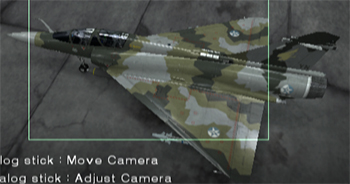
Zaharada
- Plane: Mirage 2000D
- Mission 6
- Spawn conditions: Appears from the east after some F-16Cs and F-20As are destroyed.

Tracks featured in Mission 6:
DISC 1
DISC 4
NOTE: This mission has one of (at least) three songs that aren’t on the official soundtrack for Ace Combat 5 associated with it. A down-tempo, almost vaporwave-like remix of White Bird (Part I) plays over the outro cutscene for this mission. Unfortunately, I can’t get a clean rip of it like I could the unreleased tracks from say, White Knight Chronicles because the audio for the pre-rendered cutscenes is all compressed down to one channel, so I can’t strip out the dialog and sound effects.
If you want to hear it, be sure to watch the no commentary version of the video. That way you at least don’t have to put up with Lune and I also yapping over it too.

Sketches of Basset Space Center’s catapult from ACES AT WAR:
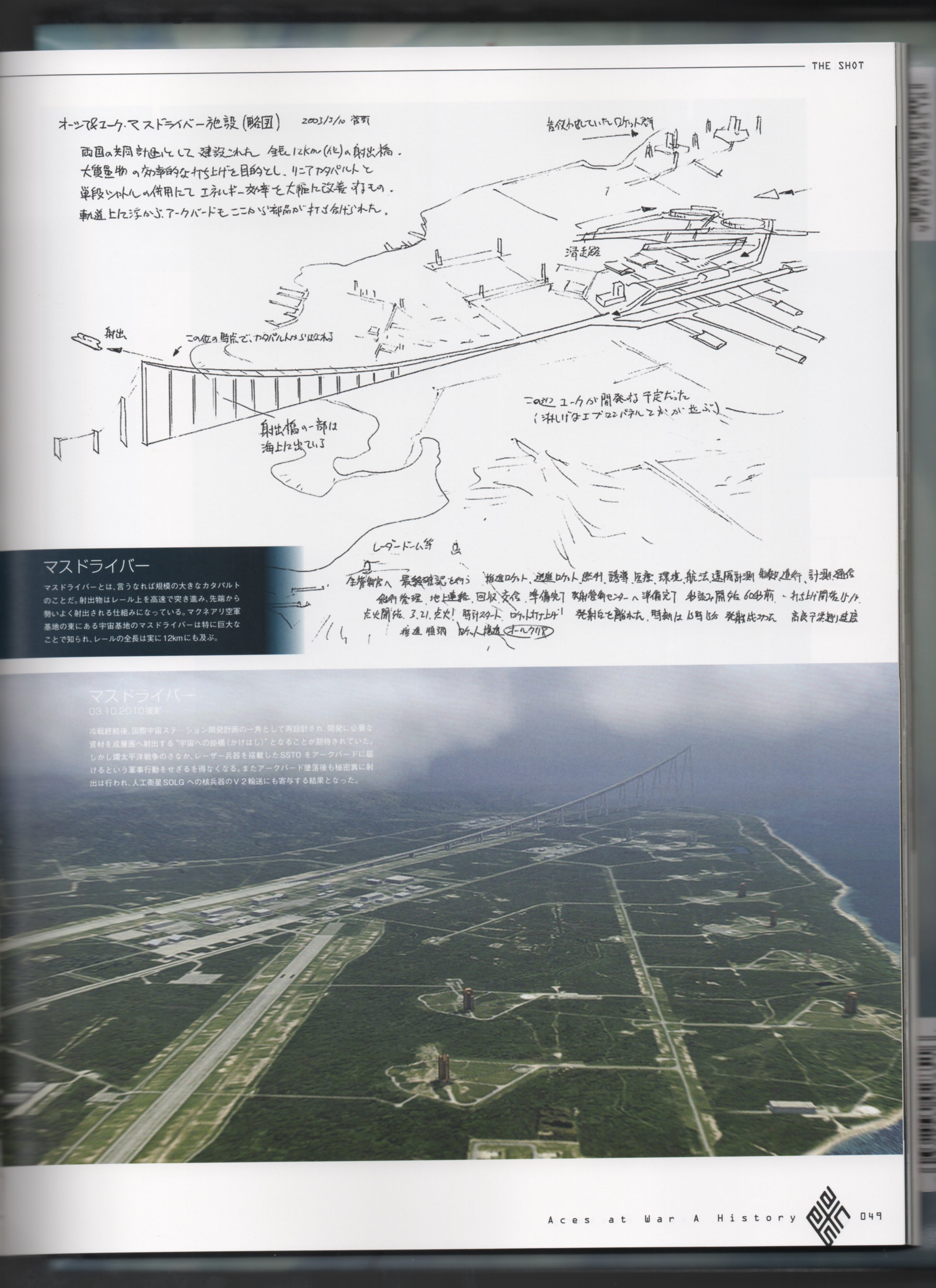
Various renders of Basset: